
This session focuses on methods for building transparent and flexible models by moving data logic out of spreadsheets and directly into the GoldSim workspace. We explore how to organize large climate datasets using array label sets and multiple series within a single element. This approach improves model navigation.
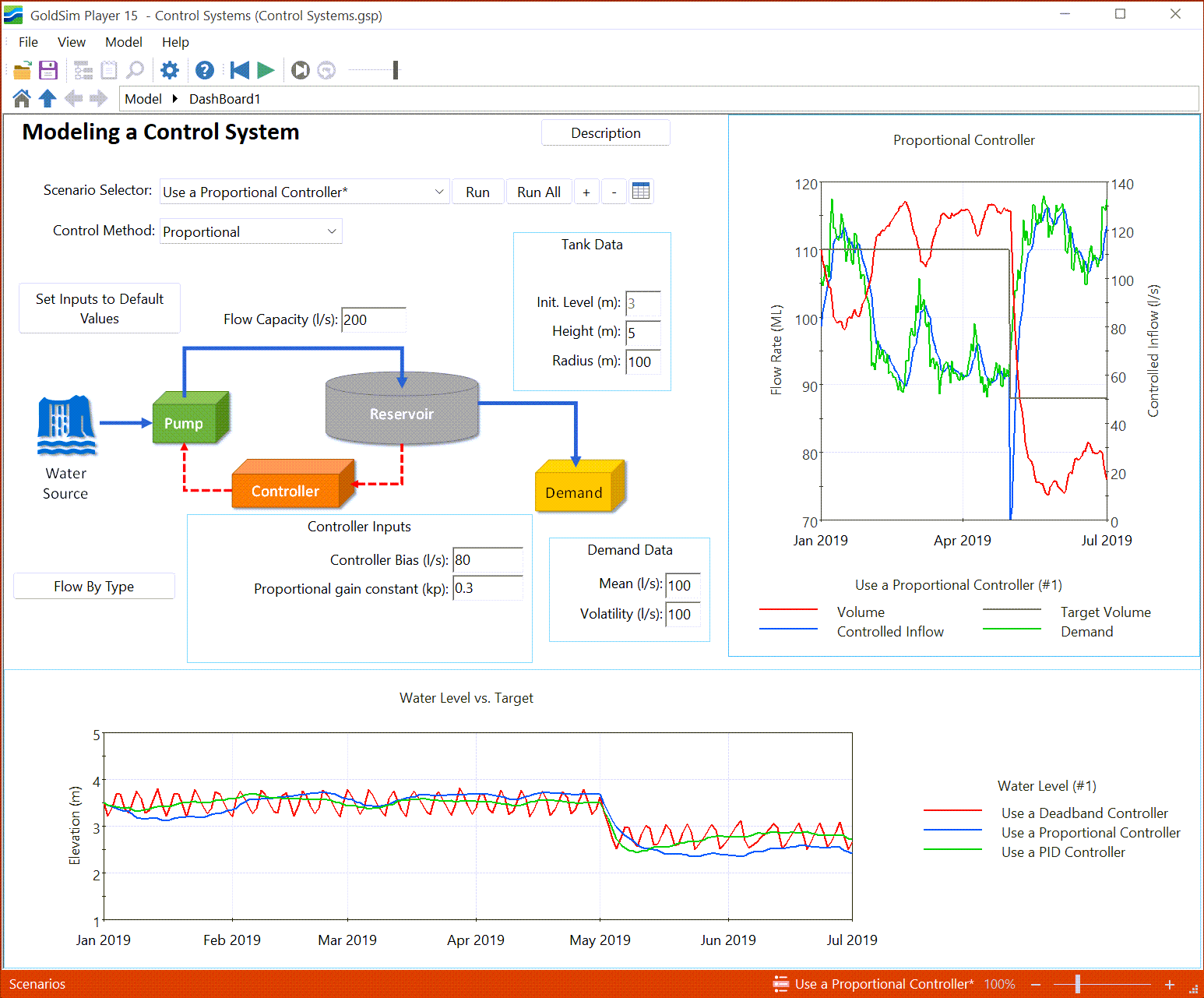
The presentation covers how to transform historical records into predictive tools through probabilistic time shifting. Instead of a simple replay of history, this technique allows the model to sample random starting years for each realization. This method helps you account for temporal variability and uncertainty when making decisions about storage requirements.
For advanced users, the webinar introduces the use of submodels to pre-process time series definitions at the start or end of a simulation. This is helpful for calculating annual means or deriving rating curves from historical data. The session concludes with a look at using the GSPY library to facilitate communication between GoldSim and Python. This integration provides a path for creating custom data exports and performing complex external analysis on simulation results while keeping the core logic within the GoldSim environment.
Below is a video recording of the webinar presentation:
Download the files used for this presentation:
Statistical Analysis of Streamflow Time Series Data – GoldSim Help Center
Multiple Series with a Time Series Element – GoldSim Help Center
Time Series Mean – GoldSim Help Center
Time Shifting Historic Time Series Data – GoldSim Help Center
Shifting Time Series Data – GoldSim Help Center
Recording and Linking Time Series – GoldSim Help Center
Array Time Series Elements – GoldSim Help Center
Using GSPy to Integrate Python with GoldSim – GoldSim Help Center
Comments
0 comments
Please sign in to leave a comment.